

As its name suggests, the Bukura Agriculture College (BAC) is one of the leading agricultural colleges and perhaps the oldest college in this niche to be founded in Kenya. The college was established in 1974 in Sigalagala, Butere, a part of Kakamega County in western Kenya. In 1992, BAC achieved a significant milestone: the year it became an official state corporation under the Act, Cap. 348 of 1999. Also, the same year, the college started admitting students who wanted to pursue diploma courses in agriculture in addition to the previous certificate courses.
The college grew from the former Bukura Institute in 1974 under the Ministry of Agriculture with the mandate of offering certificate courses in Agriculture. Today, BAC operates as a State Corporation under the Ministry of Agriculture and Irrigation, positioning itself as a crucial institution in Kenya’s agricultural education landscape. This is particularly significant considering that agriculture is key to Kenya’s economy, contributing 22.5 per cent of the Gross Domestic Product (GDP) and another 27 per cent of GDP indirectly through linkages with other sectors. The sector employs more than 40 per cent of the total population and more than 70 per cent of Kenya’s rural people.
Today, BAC offers many courses, from certificates and diplomas to short courses. The college’s mandate is to provide Agricultural Training through the integration of Research and Extension, ensuring graduates are equipped with theoretical and practical knowledge. If you are looking to join BAC in 2026, then you need to know the courses on offer. In this guide, we will walk you through all that you need to know. So make sure to read to the end.
Bukura Agricultural College Courses and Fees
The Bukura College offers several courses that take several semesters to complete. Most certificate courses will require 2 to 4 semesters, diploma courses take only 5 to 6 semesters to complete, and short courses take at most 3 months.

So, which courses are offered at Bukura College? Below, we have listed all the courses offered in 2026 and their tuition fees in Kenyan shillings.
Two-Year Training Opportunities
| Program | Entry Requirements | Career Opportunities | Annual Fees (KSH) |
|---|---|---|---|
| Diploma in Agricultural Irrigation and Drainage Engineering | KCSE Mean Grade C- (Minus) OR Certificate in Agriculture or related field from a recognized institution | Government and Public sector organizations, Agribusiness firms, Food processing and retail industry, Research organizations and laboratories, Government and NGOs | 123,300 |
| Diploma in Agribusiness Management and Marketing | KCSE Mean Grade C- (Minus) OR Certificate in Agriculture or related field from a recognized institution | Agricultural input companies, Agro-industries, Food processing industries, Food Marketing, International agricultural trade, Agricultural services, Financial institutions, Development organizations, Government and NGOs | 123,300 |
| Diploma in Horticulture | KCSE Mean Grade C- (Minus) OR Certificate in Agriculture or related field from a recognized institution | Production and Sales, Public Gardens, Landscape Construction and Management, Landscape Design, Pest Management, Government and NGOs | 123,300 |
| Diploma in Agriculture and Biotechnology | KCSE Mean Grade C- (Minus) OR Certificate in Agriculture or related field from a recognized institution | Extension agents, Farm managers, Agro-based industry managers, Food manufacturers, Agricultural companies, Agricultural research organizations, Government and NGOs | 123,300 |
| Diploma in Agriculture, Human Ecology and Consumer Science | KCSE Mean Grade C- (Minus) OR Certificate in Agriculture or related field from a recognized institution | Government and NGOs, Food processing and retail industry, Food manufacturers, Agricultural companies, Agricultural research organizations | 123,300 |
| Diploma in Animal Production and Health Management | KCSE Mean Grade C- (Minus) OR Certificate in Agriculture or related field from a recognized institution | Livestock producers, Farm managers, Livestock extension agents, Livestock-based industry managers, Government and NGOs | 123,300 |
| Diploma in Agricultural Extension and Community Development | KCSE Mean Grade C- (Minus) OR Certificate in Agriculture or related field from a recognized institution | Agricultural CBOs and NGOs, Farm managers, Food manufacturers, Agricultural companies, Agricultural research organizations, Agricultural finance institutions | 123,300 |
| Diploma in Farm Business Management | KCSE Mean Grade C- (Minus) or its equivalent OR Certificate in Agriculture or related field from a recognized institution | Farm management, Agricultural input companies, Agro-industries, Food processing industries, Food Marketing, International agricultural trade, Agricultural services, Financial institutions, Development organizations, Government and NGOs | 123,300 |
Two and a Half Year Programs
| Program | Entry Requirements | Career Opportunities | Annual Fees (KSH) |
|---|---|---|---|
| Diploma In Agricultural Education And Extension (TSC Approved) | K.C.S.E mean grade of C+ (Plus) or its equivalent with C+ (Plus) in Biology and Agriculture, and C (Plain) in Mathematics and C (plain) in English. NB: MUST have done Agriculture and Biology at O ” Level | Agriculture and Biology teachers, Extension agents, Farm managers, Research organizations, Agro based industries | 153,750 |
| Diploma In Education Biology And Home Science (TSC Approved) | K.C.S.E mean grade of C+ (Plus) or its equivalent with C+ (Plus) in Biology and Home Science, and C (Plain) in Mathematics and C (plain) in English. NB: MUST have done Home Science and Biology at O ” Level | Home Science and Biology teachers, Extension agents, Food industries, Research organizations | 152,750 |
| Diploma in Animal Health (KVB Approved) | K.C.S.E mean grade C (Plain) or its equivalent with C(Plain) in Biology/Biological Sciences, C- (Minus) in Chemistry, C- (Minus) in Mathematics or Agriculture OR Certificate in Animal Health and Production/Animal Health and Range Management OR Credit pass in 2-year Certificate in Agriculture/Animal Production / Animal Husbandry/ Range Management/ Wildlife Health / Dairy Technology OR KACE with a Principal Pass in Biology and a subsidiary pass in Chemistry, Physics, or Mathematics OR Division II in KCE/EACE & at least Credit in Biology/Biological Science, Chemistry or Physical Sciences and Credit in either Mathematics, Physics or Agriculture OR Diploma in Biomedical discipline recognized by KNQA OR Any other qualification equivalent to the above from institutions recognized by the Kenya Veterinary Board (KVB) | Paravets, Livestock producers, Farm managers, Livestock extension agents, Livestock-based industry managers, Government and NGOs | 208,000 |
| Diploma in Information Communication Technology | KCSE Mean Grade C- (Minus) or its equivalent OR Certificate in ICT from a recognized institution | Technology sector, Agricultural ICT solutions, Data management roles, Digital agriculture platforms | 169,660 |
One and a Half Year Programmes
| Program | Entry Requirements | Career Opportunities | Annual Fees (KSH) |
|---|---|---|---|
| Certificate In Agriculture And Community Development | KCSE Mean Grade D (Plain) or its equivalent | Large and small scale agribusiness farms organizations, Research organisations, Agro based industries, Government and NGOs | 85,800 |
Short Courses at Bukura Agricultural College
In addition to certificate and diploma programmes, Bukura Agricultural College offers a wide range of short courses designed for working professionals, farmers, and anyone seeking to quickly build practical agricultural skills. These courses run for a maximum of three months, making them ideal for those who cannot commit to full-time study but still want structured, hands-on training from one of Kenya’s leading agricultural institutions.
BAC’s short courses are offered throughout the year, meaning you can join at different intake points rather than waiting for the main academic year to begin. They are open to a wide audience — from practising farmers looking to improve specific skills to recent school leavers and professionals in agribusiness who want to specialise further. Most short courses do not require an advanced academic qualification, making them highly accessible.
Short courses offered at Bukura College span the following areas:
- Crop production and management — covering soil preparation, planting techniques, crop husbandry, and post-harvest handling for food and cash crops
- Horticulture and floriculture — practical training in vegetable growing, fruit production, and ornamental plant cultivation for domestic use and export markets
- Animal husbandry — livestock feeding, housing, health monitoring, and basic disease management for both small and large-scale farmers
- Dairy technology — yoghurt making, cheesemaking, and other value-added dairy production skills that allow graduates to commercially process milk from their farms
- Food processing and value addition — turning raw agricultural produce into marketable products such as jams, juices, and dried goods to increase farm-level income
- Agribusiness and farm management — budgeting, record-keeping, marketing, and running a profitable farm enterprise
- Computer and ICT skills — foundational digital literacy for agricultural professionals and those entering agribusiness or extension roles
- Geographical Information Systems (GIS) — spatial data collection and analysis for agricultural planning, land-use mapping, and natural resource management
The fees for short courses vary depending on the specific course, its duration, and the materials required. For the most accurate and current fee schedule, contact the BAC admissions office directly or visit the official website at https://bukuracollege.ac.ke to access the latest short course programme listing.
Short course certificates issued by BAC are recognised within Kenya’s agricultural sector and can strengthen your profile when seeking employment in NGOs, agribusiness firms, county government extension departments, and community-based organisations. They are also a useful pathway for those considering upgrading to a full certificate or diploma programme at a later stage.
What are the qualifications for Bukura courses?
Admission to Bukura College is based solely on merit, meaning only applicants who meet the eligibility criteria will be admitted. The eligibility criteria vary by course, and we strongly advise checking all courses listed on the Programmes tab on the portal. Below are some general application criteria applicable to all courses on offer:
You should have sat for the KCSE exams and scored the following Mean grades:
- D plain for certificate courses
- C- Minus for Diploma courses
- C+ Plus for TSC-approved teaching programs
- Short courses can require you to have a KCPE or KCSE certificate
- If upgrading, a relevant certificate or diploma in the related field is needed
All applicants must pay a non-refundable application fee of KSh 500 (Applicable only to SSP students).
Bukura College Admissions Portal: How To Apply
BAC is a public institution that also admits privately sponsored students and KUCCPS students. Below are the various ways to join the college.
Government-sponsored student
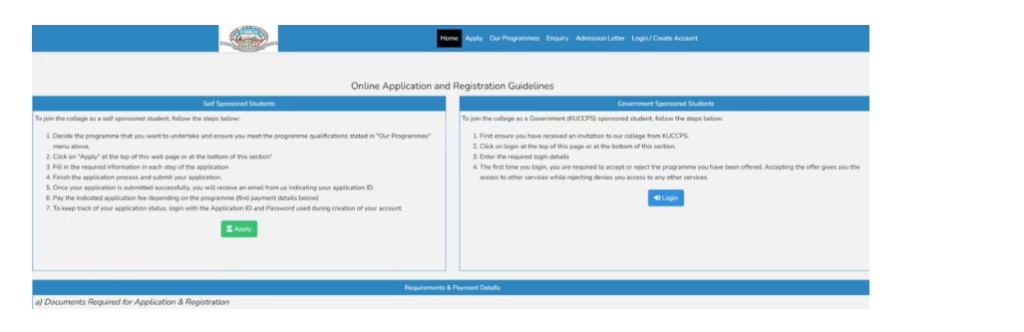
If you fall in this category, you are directly placed at Bukura College by applying using the KUCCPS Portal. But then, if you are placed in this highly esteemed college, you must ensure that you have your Bukura College admissions letter before you officially visit the school on the day of admission.
To get your KUCCPS admission letter, follow the process below:
- Visit BAC’s official admission portal website at http://admissions.bukuracollege.ac.ke/
- On the website homepage, click “Create account” and follow the process to activate your account. Check your email for further instructions
- Next, return to the portal homepage and click on the “Admission letter” tab. You will be redirected to a new tab. Here, proceed to enter your KCSE index number in the format 2950000000/2021, answer the Security stamp field, and proceed to log in to get your letter of offer
Self-sponsored student (SSP)
A self-sponsored student is an applicant who applies directly to the college through the college website for consideration. While doing so, it is essential to note that you must meet the course requirements. At the same time, make sure you have the following documents scanned and ready for upload: a passport photo, National ID (if you are above 18 years), Birth certificate (for those below 18 years), Passport (for non-Kenyans), and your relevant academic certificates.
The process for making your application is as follows:
- Visit the BAC admission portal using the link provided earlier and proceed with the registration process; otherwise, log in to your account.
- Proceed and click on the “Self-Sponsored” Application link. Alternatively, you can directly use http://admissions.bukuracollege.ac.ke/ssp/login-register
- Proceed to fill in the information as required and upload all the documents. Ensure all the information you provide matches that on the uploaded documents.
- When done, proceed to submit your application. Immediately, you will receive an email confirming you have submitted successfully, along with the application ID, so that you can follow up on the status of your application.
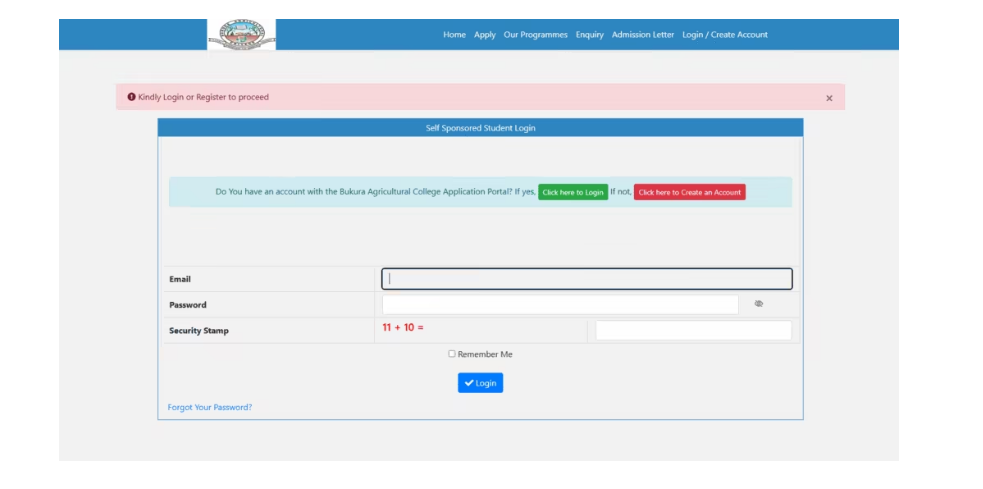
If you are accepted to the college, ensure you get and download your admissions letter by following the process we discussed earlier. However, for SSP, use the link https://admissions.bukuracollege.ac.ke/ssp/admission-letter
Financial Planning and Payment Options
Understanding the fee structure is crucial for financial planning. The fees listed above are annual, and it’s important to budget for the full program duration. For two-year diploma programs, students should budget for at least KSH 246,600 for most programs, while specialized programs like Animal Health require KSH 520,000 over the 2.5-year duration.
Students should also factor in additional costs such as:
- Accommodation (if required)
- Meals and personal expenses
- Laboratory fees and practical training costs
- Field trip and industrial attachment expenses
- Academic materials and textbooks
HELB Funding and TVET Bursaries for Bukura College Students
One of the most important pieces of information that many prospective BAC students overlook is financial assistance. Bukura Agricultural College is among the institutions supported by the Higher Education Loans Board (HELB) through a dedicated Bukura Agricultural College Students Financing Scheme. This scheme was established through a strategic partnership between HELB and BAC, giving both government-sponsored and self-sponsored students access to loans and bursaries that can cover a significant portion of their tuition fees.
What funding is available?
HELB provides two main types of financial support for students at TVET institutions like BAC:
- HELB TVET Loans — Repayable loans available to both KUCCPS-placed and self-sponsored students enrolled in certificate and diploma programmes at BAC. The loan is intended to help cover tuition fees and, in some cases, upkeep costs during the study period.
- HELB TVET Bursaries — Non-repayable grants awarded to needy students based on demonstrated financial hardship and academic merit. Unlike loans, bursaries do not require repayment, making them highly valuable for students from low-income households.
Who is eligible?
To qualify for HELB funding as a BAC student, you generally need to meet the following conditions:
- Be a Kenyan citizen currently enrolled in a recognized programme at BAC
- Be registered as either a government-sponsored (KUCCPS) student or a self-sponsored (SSP) student
- Apply during the designated HELB intake window for the relevant financial year, typically announced at the start of each academic year
- Provide supporting documents, including your BAC admission letter, national ID, and household income information, for bursary applications
How to apply for HELB funding:
- Visit the official HELB portal at https://www.helb.co.ke
- Register or log in to your HELB student account
- Select the TVET Loans or TVET Bursary application option from your student dashboard
- Complete the application form and upload all required supporting documents
- Submit your application and save your reference number for follow-up
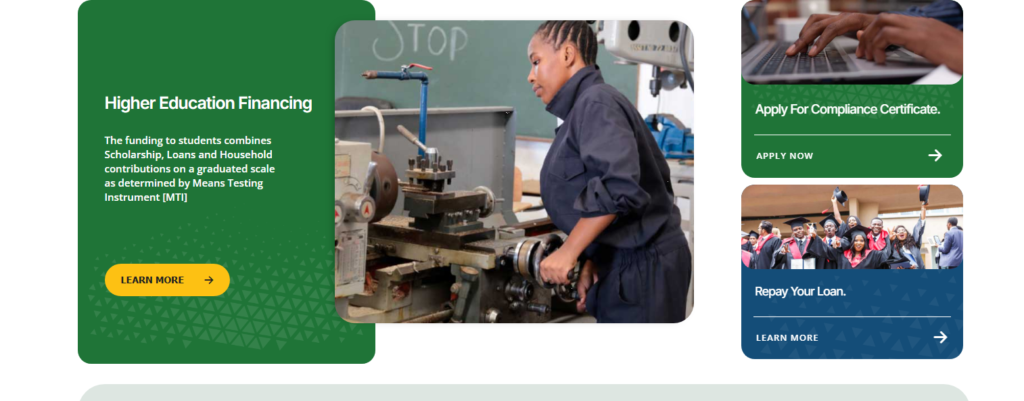
It is strongly recommended that you apply for HELB funding immediately upon receiving your BAC admission letter. Applications are processed on a rolling basis, and funding is subject to availability within each financial year. For the current application window, specific loan amounts, and bursary criteria, visit https://www.helb.co.ke or contact the BAC Finance Office directly.
Bukura College Contacts
For immediate assistance:
- Address: Sigalagala, Butere Rd, Bukura
- Phone: (+254) 0735 966 360
- Email: principal@bukuracollege.ac.ke
- Website: https://bukuracollege.ac.ke/
Frequently Asked Questions
What is the fee structure at Bukura Agricultural College?
Annual fees at Bukura Agricultural College vary by programme. Most two-year diploma programmes cost KSH 123,300 per year. TSC-approved teaching diplomas cost KSH 153,750 or KSH 152,750 per year; the Diploma in Animal Health costs KSH 208,000 per year, the Diploma in ICT costs KSH 169,660 per year, and the Certificate in Agriculture and Community Development costs KSH 85,800 per year. Always confirm the current fee structure directly at https://bukuracollege.ac.ke before making any payment.
When is the Bukura Agricultural College intake?
BAC conducts intakes at the start of each academic year. Government-sponsored students are placed through KUCCPS during the national placement cycle, while self-sponsored students can apply directly through the BAC admissions portal at http://admissions.bukuracollege.ac.ke. For the most current intake dates and deadlines, check the official BAC website or contact the admissions office directly.
Does Bukura Agricultural College offer HELB funding or TVET bursaries?
Yes. BAC is a partner institution under HELB’s dedicated Bukura Agricultural College Students Financing Scheme. Both TVET loans (repayable) and TVET bursaries (non-repayable, based on financial need) are available to eligible students. Apply through the HELB portal at https://www.helb.co.ke as soon as you receive your BAC admission letter, since funding is subject to availability each financial year.
Where is Bukura Agricultural College located?
Bukura Agricultural College is located in Sigalagala, along Butere Road, Bukura, in Kakamega County in western Kenya. The college is accessible from Kakamega town and the broader western Kenya region.
Is Bukura Agricultural College a public or private institution?
BAC is a public institution. It operates as a State Corporation under the Ministry of Agriculture and Irrigation, established under Cap. 348 of 1999. As a public institution, it is eligible for government sponsorship through KUCCPS and its programmes are nationally accredited.
What is the contact number for Bukura Agricultural College?
You can reach Bukura Agricultural College by phone at (+254) 0735 966 360, by email at principal@bukuracollege.ac.ke, or through the official website at https://bukuracollege.ac.ke/. The college is located at Sigalagala, Butere Rd, Bukura, Kakamega County.