

The Kenya National Examinations Council (KNEC) is a state-owned parastatal under the Ministry of Education, established in 1980 under the Kenya National Examinations Council Act, 2012. Today, the organization is not just focused on administering various key examinations in the country for primary school students (KPSEA & KILEA) and KCSE for secondary school students, but they are also involved with other activities such as setting exams, marking the exams, and issuing KNEC exam certificates to all.
When issuing various KNEC certificates to students, common errors, such as misspelled names, can occur. The good news is that if you have a certificate with any of these issues, or want to change your KNEC certificate for reasons best known to you, the process is easier than you think.
You need to meet the eligibility criteria and know where to make your application. If you don’t know where to get help, this article will walk you through everything you need to know about the KNEC certificate name change in 2026.
What is a KNEC Certificate?
In Kenya, it is a common practice that after each level of education, students must sit for various examinations. If you are a primary student, you will have to sit for the KILEA and KPSEA, depending on the grade that you are in. On the other hand, for secondary school students, there are the KCSE examinations. When these exams are released, KNEC will issue you a certificate.

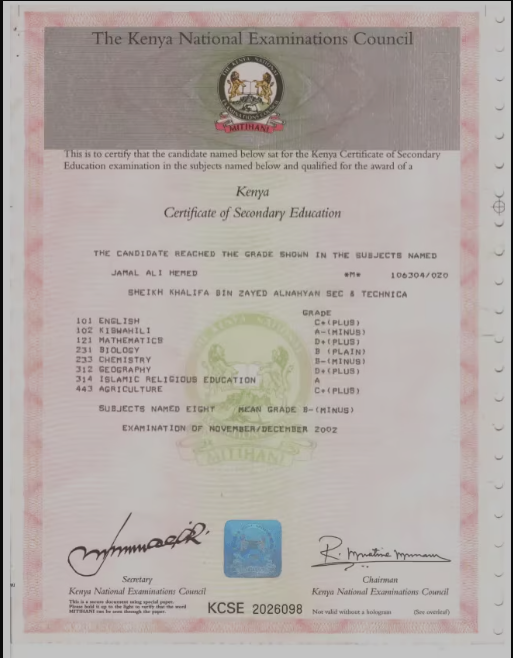
So basically, a KNEC certificate is a document that shows you have successfully completed a certain level of education. The certificate contains your name, the school you sat for the exam, and the grades you scored. Below is an example of a KNEC certificate issued to a KCSE student:
KNEC also oversees examinations for teacher training programs, which include:

- Diploma in Teacher Education (DTE)
- Primary Teacher Education (PTE)
- Diploma in Early Childhood Teacher Education (DECTE)
- Teacher Certificate for Adult Education (TCAE)
Additionally, KNEC conducts business and technical examinations, as well as foreign examination equivalence services, for those with international qualifications seeking recognition in Kenya.
When Can You Request a Name Change?
KNEC allows candidates to request a name change or amendment under specific circumstances. Understanding whether your situation qualifies will save you time before you begin gathering documents. You can request a name change on your KNEC certificate in the following situations:
1. Spelling Errors
If your name was misspelled during registration and the name on your certificate does not match your national ID or birth certificate, you are eligible to apply for a name correction. This is the most common reason for name change requests and is handled as a minor amendment.

2. Name Mismatch Between Certificate and Official Documents
If the name on your KNEC certificate does not match the name appearing on your national ID card, birth certificate, or passport, KNEC allows you to apply for an amendment to align the certificate with your official identification documents.
3. Legal Name Change
If you have undergone a formal legal name change — such as a change of surname following marriage, or a name change published in the Kenya Gazette — KNEC will update your certificate to reflect the new name. Note that for legal name changes, sworn affidavits are not accepted; you must provide official legal documentation (see Requirements section below).
4. Errors Introduced by the Institution
If the error in your name was made at the school or examination centre level — for example, if your name was entered incorrectly during candidate registration — you will need a letter from the head of the school confirming the error before KNEC can process your amendment.
Important Timelines and Deadlines
Before reviewing the name change process, it’s crucial to understand that KNEC allows candidates or institutions thirty (30) days after the date of release of the results/certificates to raise any queries arising from the released examination results/certificates. After this period, queries may attract additional penalties, so it’s important to act quickly if you notice any errors on your certificate.
While KNEC has made it easier for anyone to change their name on various academic certificates, it is only permitted for applicants who have met the various requirements. They include:
- A copy of your original National ID card
- If you changed schools, you must have an official letter written by the head of the former school
- A copy of the birth certificate and the result slip
- A police abstract for those applying for lost KNEC certificates
- A sworn legal affidavit from a lawyer or advocate (for minor spelling corrections only — see note below)
- A bank slip copy of the application fee of Ksh 5,000
Applicants who have legally changed their names must attach the legal documents used to change the name, e.g., a marriage certificate for women or a copy of the Kenya Gazette in which the changed name appears (original).
Note
Sworn affidavits are only acceptable for minor spelling corrections, for example, a single incorrect letter or a transposed name. They are NOT acceptable for formal legal name changes, such as a change of surname following marriage or an officially gazetted name change. For legal name changes, you must submit the primary legal document itself (marriage certificate, Kenya Gazette notice, or court order) as the supporting document. This is particularly important for married women who have changed their surnames or individuals who have undergone formal name changes through legal processes.
If you sat your examination at a school that is now closed or at a private examination centre, an applicant is required to obtain a letter of recommendation for the replacement from the relevant education authorities or KNEC directly, as the original school head may not be available to provide the required documentation.
How to Change Your Name on a KNEC Certificate
The application for the KNEC certificate name change is made at the school level or the official institution where you sat your KNEC examinations. This is the official recommendation that KNEC recommends. All you need is to visit your former or current school and request a name change from the school head office.
While doing so, ensuring that you have prepared all the required documents we discussed above is essential to facilitate easy application processing.
Online Application Process
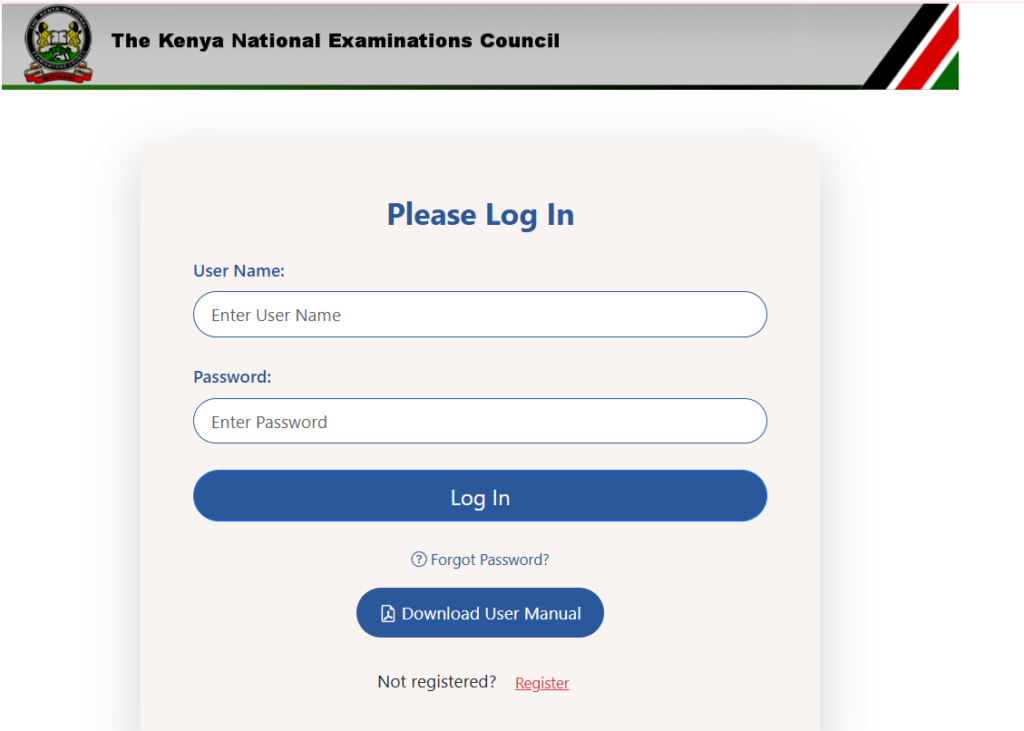
KNEC has moved the certificate replacement process to an online platform. You can now apply through the Query Management Information System (QMIS) portal, which provides a more streamlined approach to handling certificate-related issues.
To access the online system, follow these steps:
- Visit https://qmis.knec.ac.ke to access the QMIS system
- Register as a new user if you haven’t used the system before, or log in with your existing credentials
- Once logged in, navigate to the Query tab on the dashboard
- Select Biodata Amendment from the dropdown menu
- Click Find to search for your examination record using your index number
- Under the amendment type, select Name Amendment
- Fill in the correct name details as they should appear on the certificate
- Upload all required supporting documents in the accepted file formats (PDF or JPEG)
- Pay the application fee of Ksh 5,000 through the available payment methods (M-Pesa or bank transfer)
- Submit your application and note the reference number provided for tracking
Alternatively, you can also request a name change by sending the completed application letter along with the required documents to the KNEC CEO using the address below:
P.O. Box 73598 – 00200, City Square, Nairobi.
Once you have submitted your application with all the required documents and paid the necessary fees, you can collect the certificate at the KNEC offices after approximately 10–15 working days. However, processing times may vary depending on the complexity of your case and the current workload at KNEC.
Name Change vs. Certificate Replacement
It’s important to distinguish between a name change and certificate replacement, as these are different processes:
- Name Change/Amendment: This is when you need to correct or change the name on your existing certificate due to errors or legal name changes.
- Certificate Replacement: This applies when you have lost or damaged your original certificate and need a completely new copy issued.
Both processes may have different requirements and fees, so ensure you’re applying for the correct service based on your specific situation.
KNEC Contacts
For immediate assistance, you can reach out to KNEC directly using the contacts below:
- Phone: 0720741001 / 0720741003 / 0720741094 / 0732333530 / 0732333780
- Email: info@knec.ac.ke
- Website: https://www.knec.ac.ke/
- Fax: +254-020-2226032
- QMIS Portal: https://qmis.knec.ac.ke/
For job applications and other official correspondence, you can also use: ceo@knec.ac.ke
Frequently Asked Questions
How do I change my name on a KNEC certificate without the original copy?
If you have lost your original certificate, you will need to first obtain a police abstract as proof of the loss. You then apply through the QMIS portal at https://qmis.knec.ac.ke with the police abstract plus all other required documents. KNEC will issue a replacement certificate with the corrected name in place of the lost original.
Can I change my KNEC certificate name via SMS or phone?
No. KNEC does not process name change requests via SMS or phone calls. All applications must be submitted either through the official QMIS online portal at https://qmis.knec.ac.ke or by mail to the KNEC CEO at P.O. Box 73598 – 00200, City Square, Nairobi, along with all required supporting documents.
How long does a KNEC name change take to process?
Once you have submitted your complete application with all required documents and paid the Ksh 5,000 fee, processing typically takes approximately 10–15 working days. Processing times may vary depending on the complexity of your case and the current workload at KNEC offices at the time of application.
What is the fee for a KNEC certificate name change?
KSh 5,000


