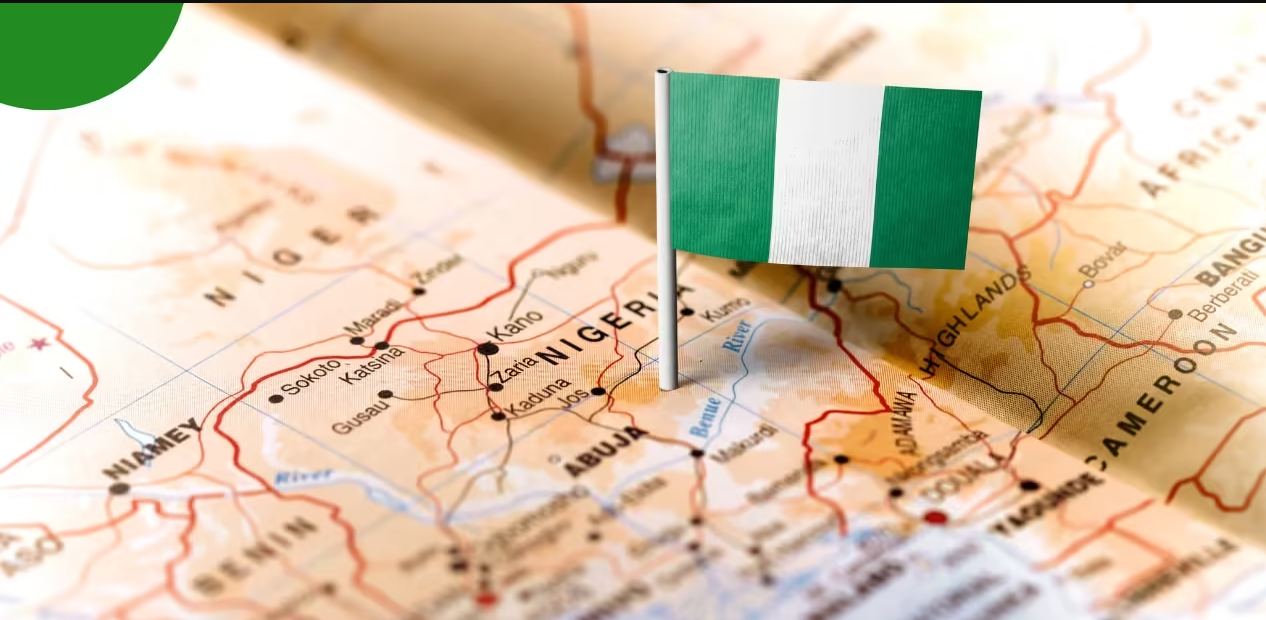

Nigeria, formerly known as the Federal Republic of Nigeria, is West Africa’s most prominent nation and Africa’s most populous country. The current population of Nigeria is estimated at 242,431,832 people as of 2026, securing its position as the world’s sixth most populous nation. This demographic powerhouse operates as a federal republic under the Constitution of Nigeria, which serves as the country’s supreme legal framework.
The current constitution, enacted on May 29, 1999, establishes a federal government structure that oversees the entire nation. Nigeria’s complex political organization divides the country into six distinct geopolitical zones, which are further subdivided into states and local government areas. This multilayered approach brings governance closer to Nigeria’s diverse population, ensuring better representation and administrative efficiency across different regions.
How Many States Does Nigeria Have?
As of 2026, Nigeria comprises exactly 36 states plus one Federal Capital Territory (FCT), with Abuja serving as the national capital. The Federal Capital Territory, established in 1976, operates as a distinct administrative unit rather than a traditional state and is subject to direct federal oversight.
It’s important to understand that Nigeria’s current state structure represents the culmination of decades of administrative evolution. There is currently a Parliamentary House of Representatives committee initiative proposing the creation of additional states. Multiple proposals have been submitted, including one for 31 new states and another for 46 new states, which would significantly increase the total if approved. However, as of now, these remain proposals under constitutional review and have not been implemented.

The Historical Evolution of Nigerian States
The formation of Nigeria’s current state structure represents a fascinating journey of political reorganization that unfolded over nearly three decades. Rather than being established all at once following independence from British colonial rule, Nigeria’s states emerged through six major administrative reforms between 1967 and 1996.
Understanding this evolution helps explain why Nigeria’s current structure differs significantly from the original four regions established in 1960. The transformation began with General Yakubu Gowon’s post-civil war reorganization and continued through successive military administrations, each responding to the growing demands for better representation and administrative efficiency.

The evolution of Nigeria’s states is as follows:
- 1967: General Yakubu Gowon implemented the most significant initial change, replacing the original four regions (Northern, Western, Eastern, and Mid-Western) with 12 states. This restructuring aimed to address ethnic tensions and provide more equitable representation following the Nigerian Civil War.
- 1976: Under General Murtala Mohammed’s administration, seven additional states were created, increasing the total to 19 states. This same reform also established the Federal Capital Territory (FCT) in Abuja, moving the capital away from Lagos to a more centrally located, neutral territory.
- 1987: General Ibrahim Babangida’s government added two more states—Akwa Ibom and Katsina—bringing the national total to 21 states. These additions addressed specific regional demands for better administrative representation.
- 1991: The most substantial single expansion occurred under Babangida’s continued leadership, when nine additional states were created simultaneously, raising the count to 30 states. This expansion reflected growing pressure from various ethnic and regional groups seeking greater autonomy.
- 1996: General Sani Abacha completed Nigeria’s current state framework by creating the final six states: Bayelsa, Ebonyi, Ekiti, Gombe, Nasarawa, and Zamfara. This brought Nigeria to its present configuration of 36 states plus the Federal Capital Territory.
List of Nigerian States
The following comprehensive table presents all 36 Nigerian states and the Federal Capital Territory, organized alphabetically with their key administrative information:
| No. | State | Capital | Date Created | Geopolitical Zone | Abbreviation |
|---|---|---|---|---|---|
| 1 | Abia | Umuahia | August 27, 1991 | South East | AB |
| 2 | Adamawa | Yola | August 27, 1991 | North East | AD |
| 3 | Akwa Ibom | Uyo | September 23, 1987 | South South | AK |
| 4 | Anambra | Awka | August 27, 1991 | South East | AN |
| 5 | Bauchi | Bauchi | February 3, 1976 | North East | BA |
| 6 | Bayelsa | Yenagoa | October 1, 1996 | South South | BY |
| 7 | Benue | Makurdi | February 3, 1976 | North Central | BE |
| 8 | Borno | Maiduguri | February 3, 1976 | North East | BO |
| 9 | Cross River | Calabar | May 27, 1967 | South South | CR |
| 10 | Delta | Asaba | August 27, 1991 | South South | DE |
| 11 | Ebonyi | Abakaliki | October 1, 1996 | South East | EB |
| 12 | Edo | Benin City | August 27, 1991 | South South | ED |
| 13 | Ekiti | Ado-Ekiti | October 1, 1996 | South West | EK |
| 14 | Enugu | Enugu | August 27, 1991 | South East | EN |
| 15 | Gombe | Gombe | October 1, 1996 | North East | GO |
| 16 | Imo | Owerri | February 3, 1976 | South East | IM |
| 17 | Jigawa | Dutse | August 27, 1991 | North West | JI |
| 18 | Kaduna | Kaduna | May 27, 1967 | North West | KD |
| 19 | Kano | Kano | May 27, 1967 | North West | KN |
| 20 | Katsina | Katsina | September 23, 1987 | North West | KT |
| 21 | Kebbi | Birnin Kebbi | August 27, 1991 | North West | KE |
| 22 | Kogi | Lokoja | August 27, 1991 | North Central | KO |
| 23 | Kwara | Ilorin | May 27, 1967 | North Central | KW |
| 24 | Lagos | Ikeja | May 27, 1967 | South West | LA |
| 25 | Nasarawa | Lafia | October 1, 1996 | North Central | NA |
| 26 | Niger | Minna | February 3, 1976 | North Central | NI |
| 27 | Ogun | Abeokuta | February 3, 1976 | South West | OG |
| 28 | Ondo | Akure | February 3, 1976 | South West | ON |
| 29 | Osun | Osogbo | August 27, 1991 | South West | OS |
| 30 | Oyo | Ibadan | February 3, 1976 | South West | OY |
| 31 | Plateau | Jos | February 3, 1976 | North Central | PL |
| 32 | Rivers | Port Harcourt | May 27, 1967 | South South | RI |
| 33 | Sokoto | Sokoto | February 3, 1976 | North West | SO |
| 34 | Taraba | Jalingo | August 27, 1991 | North East | TA |
| 35 | Yobe | Damaturu | August 27, 1991 | North East | YO |
| 36 | Zamfara | Gusau | October 1, 1996 | North West | ZA |
| 37 | FCT | Abuja | December 12, 1991 | Federal Capital Territory | FCT |
Nigeria’s Geopolitical Zones
Nigeria’s 36 states are strategically organized into six geopolitical zones, each representing distinct cultural, economic, and administrative regions. This zoning system facilitates balanced representation in federal appointments and resource allocation.
- North Central Zone: Often referred to as the “Middle Belt,” this zone comprises Benue, FCT (Abuja), Kogi, Kwara, Nasarawa, Niger, and Plateau states. It serves as a bridge between Nigeria’s predominantly Muslim north and Christian south.
- North East Zone: Comprising Adamawa, Bauchi, Borno, Gombe, Taraba, and Yobe states, this region faces unique challenges, including security concerns and challenges related to development initiatives.
- North West Zone: The most populous geopolitical zone includes Jigawa, Kaduna, Kano, Katsina, Kebbi, Sokoto, and Zamfara states, representing Nigeria’s traditional commercial and Islamic heartland.
- South East Zone: Consisting of Abia, Anambra, Ebonyi, Enugu, and Imo states, this zone is predominantly Igbo-speaking and known for its entrepreneurial culture and commercial activities.
- South-South Zone: This oil-rich region comprises Akwa Ibom, Bayelsa, Cross River, Delta, Edo, and Rivers states and contributes significantly to Nigeria’s petroleum revenue.
- South West Zone: Comprising Ekiti, Lagos, Ogun, Ondo, Osun, and Oyo states, this Yoruba-dominated zone is Nigeria’s commercial and industrial hub, with Lagos as the economic capital.
FAQs
What are the 36 states in Nigeria?
The 36 states in Nigeria are: Abia, Adamawa, Akwa Ibom, Anambra, Bauchi, Bayelsa, Benue, Borno, Cross River, Delta, Ebonyi, Edo, Ekiti, Enugu, Gombe, Imo, Jigawa, Kaduna, Kano, Katsina, Kebbi, Kogi, Kwara, Lagos, Nasarawa, Niger, Ogun, Ondo, Osun, Oyo, Plateau, Rivers, Sokoto, Taraba, Yobe, and Zamfara. Additionally, there is the Federal Capital Territory (FCT) Abuja, which operates as a distinct administrative zone separate from the 36 states.
How many states are in the Nigerian list?
Nigeria has exactly 36 states plus one Federal Capital Territory (FCT). The FCT operates as a distinct administrative territory rather than a traditional state, which is why the official count is 36 states, not 37.
Which state has the highest population in Nigeria in 2026?
What is the richest state in Nigeria?
Lagos State is the richest state in Nigeria by GDP, with an estimated GDP of ₦61.17 trillion as of recent economic assessments. Its wealth stems from its role as Nigeria’s commercial and financial hub, hosting the largest seaport, major industries, and serving as a center for banking, telecommunications, and entertainment.
What state is Abuja in?
Who created the 30 states in Nigeria?
General Ibrahim Babangida established Nigeria’s 30-state structure in 1991 by adding nine states to the existing 21. This expansion increased the number of states from 21 to 30 and was part of his administration’s efforts to address demands for greater regional representation and administrative decentralization.