

For many years, Kenya has been a top destination for tourists worldwide who want to visit the country’s national parks and game reserves. In the first half of 2024 alone, the number of tourists in the country reached 1,027,630, representing significant growth compared to previous years. By December 2024, Kenya recorded a confirmed 2.4 million international tourist arrivals, and the government has set an ambitious target of 5 million international visitors annually by 2027. The top destinations for international and local tourists are the various parks and game reserves in the country, all managed by the Kenya Wildlife Service (KWS).
If you plan to visit Kenya’s various national heritages and protected sites, understanding the KWS conservation fees is essential for proper budget planning and trip preparation. The fees for parks are usually announced annually by the KWS, with the most recent and significant changes taking effect on October 1, 2025, the first comprehensive fee revision in 18 years covering the 2025/2026 financial year.
These updated KWS park fees 2026 apply across all categories of national parks, reserves, and sanctuaries, and are structured by park type rather than individual parks, making it easier to plan visits across multiple destinations.
How Many KWS Parks and Game Reserves Are in Kenya?
There are over 411 protected areas in Kenya that are recognized worldwide, but the specific number of parks includes 23 national parks, 28 national reserves, and 4 national sanctuaries. The KWS manages the national parks directly, while the game reserves are privately owned or managed by local communities through various conservancy models that promote community-based conservation.

The most well-known protected sites include the Masai Mara National Reserve, famous for its great migration of wildebeest and zebras, and Amboseli National Park, which provides a captivating view of Mount Kilimanjaro. Other premium destinations include Lake Nakuru National Park, renowned for its flamingo populations and diverse bird species, and Tsavo East and West National Parks, collectively forming one of the largest wilderness areas in the world.
Kenya’s protected areas are strategically categorized into different classifications that affect pricing: Premium Parks (Amboseli and Lake Nakuru), Wilderness Parks, Urban Safari destinations, Mountain Climbing areas, Marine Protected Areas, Scenic Parks, Special Interest Parks, and Sanctuaries. This classification system helps KWS manage visitor flow while ensuring conservation funding reaches the most critical habitats.
What Are the New KWS Park Fees for 2026?
If you are a visitor to any park or game reserve in Kenya, one requirement is that you will not be allowed inside unless you have paid the various entry fees. The charges vary from one park category to another and are influenced mainly by whether you are a Kenyan citizen, an East African Community (EAC) resident, or an international tourist.
The Kenya Wildlife Service has implemented a tiered pricing structure designed to make conservation accessible to local communities while generating sustainable revenue from international tourism. This approach supports both wildlife protection efforts and community development initiatives around protected areas.
As per the official KWS Conservation Fees 2025 (Legal Notice No. 160 of 2025), the fees are classified into four visitor categories: East African Citizen (KSH), Kenya Resident (KSH), Non-Resident (USD), and African Citizen (USD), as seen in the comprehensive table below:

| # | Park / Category | EAC Citizen Adult (KSH) | EAC Citizen Child (KSH) | Kenya Resident Adult (KSH) | Kenya Resident Child (KSH) | Non-Resident Adult (USD) | Non-Resident Child (USD) | African Citizen Adult (USD) | African Citizen Child (USD) |
|---|---|---|---|---|---|---|---|---|---|
| 1 | PREMIUM PARKS — Amboseli & Lake Nakuru National Parks | 1,500 | 750 | 2,025 | 1,050 | 90 | 45 | 50 | 25 |
| 2 | URBAN PARK — Nairobi National Park | 1,000 | 500 | 1,350 | 675 | 80 | 40 | 40 | 20 |
| 3 | Nairobi Package (Nairobi NP + Animal Orphanage + Safari Walk) | 1,300 | 700 | 1,750 | 950 | 105 | 55 | 55 | 20 |
| 4 | WILDERNESS PARKS (A) — Tsavo East & Tsavo West National Parks | 1,000 | 500 | 1,350 | 675 | 80 | 40 | 40 | 20 |
| 5 | WILDERNESS PARKS (B) — Meru, Kora & Aberdare National Parks | 800 | 500 | 1,100 | 675 | 70 | 40 | 40 | 20 |
| 6 | Tsavo West–Amboseli Package | 2,200 | 1,100 | 2,900 | 1,550 | 150 | 80 | 80 | 45 |
| 7 | Tsavo East–Tsavo West–Amboseli Package | 3,000 | 1,500 | 4,000 | 2,150 | 215 | 115 | 115 | 60 |
| 8 | MOUNTAIN PARK — Mt. Kenya National Park | 800 | 400 | 1,100 | 550 | 70 | 35 | 30 | 15 |
| 9 | SCENIC PARKS — Hell’s Gate, Mt. Longonot, Mt. Elgon, Ol Donyo Sabuk NPs; Lake Elementaita, Shimba Hills & Kakamega National Reserves | 500 | 250 | 675 | 350 | 50 | 25 | 20 | 10 |
| 10 | SPECIAL INTEREST PARKS — Mwea, Ruma, Saiwa Swamp, South Turkana, Sibiloi, Central Island, South Island, Ndere Island, Malka Mari, Chyulu Hills, Marsabit NPs & Tana River Primate | 500 | 250 | 675 | 350 | 40 | 20 | 20 | 10 |
| 11 | SANCTUARIES — Nairobi Animal Orphanage, Nairobi Safari Walk & Kisumu Impala Sanctuary | 300 | 200 | 405 | 300 | 25 | 15 | 15 | 10 |
| 12 | Nairobi Sanctuary Package (Orphanage + Safari Walk) | 500 | 300 | 675 | 500 | 40 | 20 | 25 | 15 |
| 13 | MARINE PROTECTED AREAS — Kisite Mpunguti, Watamu, Mombasa, Malindi, Kiunga & Diani Chale | 500 | 250 | 675 | 350 | 25 | 15 | 15 | 10 |
Note
We have sourced the fee structure listed above directly from the official KWS Conservation Fees 2025 (Legal Notice No. 160 of 2025), effective October 1, 2025. Fees are categorized by park type, not individual parks. All fees are valid for a 24-hour period. During low season (April–June), some parks may offer reduced rates of 20–30%, while high-season (July–March) rates apply at full tariff.
Why KWS Increased Park Fees in 2025
The October 2025 revision marks the first comprehensive update to KWS conservation fees in 18 years, and understanding why these changes were made helps visitors appreciate the value behind every entry fee paid.
The core driver is conservation funding. Kenya’s national parks and reserves are home to over 70,000 large mammals and more than 1,100 bird species, making them one of the world’s most significant biodiversity hotspots. Despite this, chronic underfunding had long threatened KWS’s ability to carry out its mandate effectively — from ranger patrols and anti-poaching operations to road maintenance and visitor infrastructure. The new fee structure is projected to raise up to KSH 19.79 billion annually, compared to just KSH 7.92 billion under the old tariff. That additional revenue goes directly into:
- Enhanced anti-poaching operations — more rangers, better equipment, and improved patrol coverage across vast wilderness areas
- Habitat restoration — ecological rehabilitation of degraded zones within parks and buffer areas
- Community programs — mitigation of human–wildlife conflict in areas bordering protected zones, directly benefiting local populations
- Infrastructure upgrades — modernized park roads, improved visitor facilities, and eco-lodge enhancements
- Digital access — continued investment in eCitizen-based booking and payment systems for seamless park entry
The fee revision was also driven by the need to align Kenya’s park entry charges with comparable African safari destinations such as Tanzania’s Serengeti and Botswana’s Okavango, where non-resident fees have long been significantly higher. The new tariff keeps Kenya competitive while ensuring sustainable revenue for long-term wildlife protection.
Who Is Exempt From Paying KWS Park Fees
Not everyone is required to pay conservation fees when visiting Kenya’s national parks and reserves. The official KWS Conservation Fees 2025 regulations explicitly provide for five categories of persons who are fully exempt:
- Children aged 5 years and younger — free entry to all KWS-managed parks, reserves, and sanctuaries
- Kenyan citizens aged 70 years and older — seniors enjoy full free access to all national parks
- Persons with disabilities — as defined under the Persons with Disabilities Act, 2025 (No. 4 of 2025)
- Registered tour drivers, guides, boat crew, and porters — must be registered by the Tourism Regulatory Authority (TRA) and members of a registered association
- Beach Management Units (BMU) fishing boats — exempt specifically from marine protected area boat anchoring fees
If you fall under any of these categories, you are entitled to free or reduced access. It is advisable to carry your identification or relevant registration documents when entering the park to avoid delays at the gate. Children between 5 and 17 years, as well as students up to 23 years visiting on documented educational arrangements, qualify for the child/student rate, which is typically half the adult fee.
Additional Costs and Services
Apart from the basic entry fees, various additional charges apply depending on your activities and requirements. These supplementary costs help maintain park facilities and provide enhanced visitor experiences.
Security and Guided Tour Fees
| Service | Amount (KSH) |
|---|---|
| Up to 4 hours | 2,000 |
| Over 4 hours | 4,000 |
Vehicle Entry Charges (Per Day)
| Vehicle Category | Amount (KSH) |
|---|---|
| Less than 6 seats | 600 |
| 6–12 seats | 1,500 |
| 13–24 seats | 3,000 |
| 25–44 seats | 4,500 |
| 45 seats and above | 5,000 |
Special Activities and Experiences
| Activity | EAC Citizens/Residents (KSH) | Non-Residents (USD) |
|---|---|---|
| Cycling per day (Hell’s Gate, Mt. Longonot, Ol Donyo Sabuk, Sibiloi, Lake Elementaita, Kakamega) | 300 | 10 |
| Night Game Drive (selected parks, per person per trip) | 3,000 | 50 |
| Lake Boating (per person per hour) | 1,500 | 15 |
| Fishing (parks/reserves, per line, excl. marine) | 1,500 | 15 |
| Walking Safaris (organized group, max 10 pax, Tsavo East/West, Meru & Kora, per person per day) | 3,000 | 50 |
| Horse Riding — Private Horses (per day, excl. rider) | 1,500 | 15 |
| Balloon Safari (per landing, per person) | — | Adult USD 80 / Child USD 40 |
| Helicopter Scenic Flight (up to 2 hours) | 5,000 | 100 |
| Animal Tracking (selected parks, per person, excl. park fee) | 2,000 | 20 |
| Dhow Excursion within Marine Protected Areas | 1,000 | 10 |
| Picnic charges within KWS stations (per person) | 100 | 10 |
| Motorcycles (Hell’s Gate, Longonot, Ol Donyo Sabuk, Sibiloi, Mt. Kenya, Saiwa Swamp, Lake Elementaita, Kakamega) | 500 | 10 |
Nairobi Package Rates
| Package | EAC Citizen Adult (KSH) | EAC Citizen Child (KSH) | Kenya Resident Adult (KSH) | Kenya Resident Child (KSH) | Non-Resident Adult (USD) | Non-Resident Child (USD) |
|---|---|---|---|---|---|---|
| Nairobi National Park + Orphanage + Safari Walk | 1,300 | 700 | 1,750 | 950 | 105 | 55 |
| Nairobi Sanctuary Package (Orphanage + Safari Walk) | 500 | 300 | 675 | 500 | 40 | 20 |
Camping Fees
| Site | EAC Citizen Adult (KSH) | EAC Citizen Child (KSH) | Non-Resident Adult (USD) | Non-Resident Child (USD) |
|---|---|---|---|---|
| Special Campsites — Premium Parks (Amboseli & Lake Nakuru) | 500 | 250 | 50 | 25 |
| Special Campsites — All Other Parks | 250 | 200 | 35 | 20 |
| Public Campsites — Premium Parks (Amboseli & Lake Nakuru) | 250 | 200 | 30 | 25 |
| Public Campsites — All Other Parks | 200 | 150 | 20 | 15 |
Note: Special campsite reservation fee: KSH 10,000 per week (non-refundable).
Annual Passes and Corporate Packages
For frequent visitors and tour operators, KWS offers annual passes that provide significant cost savings while supporting long-term conservation funding:
| Pass Type | Amount (KSH) |
|---|---|
| Adult Annual Pass | 45,000 |
| Child Annual Pass | 10,400 |
| Couple’s Annual Pass (any two adults) | 80,000 |
| Family Annual Pass (any two adults + up to 5 children) | 130,000 |
| Corporate Annual Pass | 120,000 |
| Marine Annual Pass | 10,500 |
| Tour Driver Personalized Annual Pass | 4,000 |
Group Discounts and Conference Rates
KWS offers substantial discounts for educational institutions, conferences, and large groups under the Meetings, Incentives, Conferences, and Events (MICE) framework, promoting environmental education and sustainable tourism:
- 100+ participants: 30% discount
- 50–99 participants: 20% discount
- 30–49 participants: 10% discount
- 10–29 participants: 5% discount
These rates apply to park entry fees for East African Citizens, Residents, African Citizens, and Non-Residents. Prior booking is required to qualify for MICE group discounts.
How to Pay KWS Park Fees
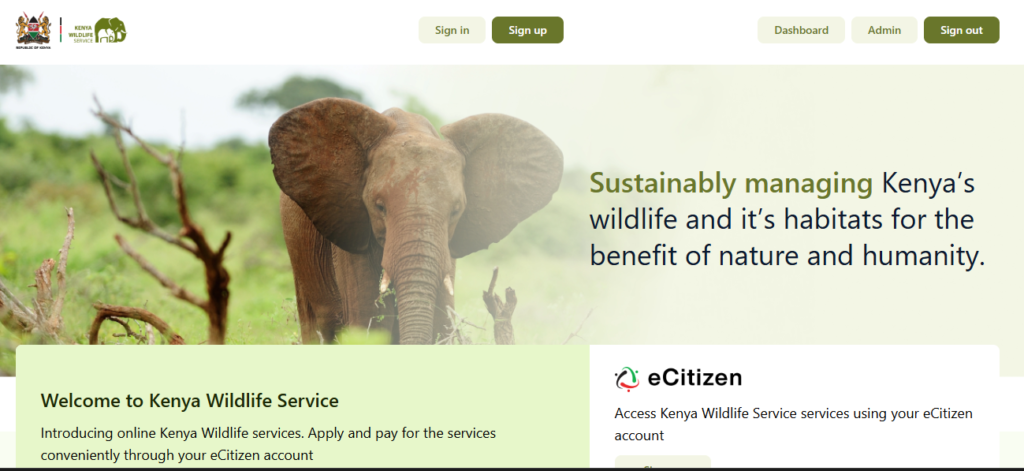
In January 2017, KWS transitioned to a completely cashless payment system, meaning that all payments to any park in Kenya must be made via the eCitizen government platform. This digital transformation has streamlined the entry process, reduced waiting times, and improved transparency in park revenue management.
To access the platform, you need to be registered and have your account verified with appropriate identification documents. If you are new to Kenya and do not know how to create an eCitizen account, the process is straightforward and can be completed online before your visit.
- Visit the official KWS Portal on eCitizen via https://kws.ecitizen.go.ke/ and sign in
- Locate the Park Application form and start filling it out correctly. Select the park you want to visit, provide your details, and provide general information as needed.
- Once you complete the application form, the final stage requires you to proceed and pay the entry fees through various payment methods provided, such as M-Pesa, Bank, or credit card.
- Choose the payment method that suits you. For local tourists, using M-Pesa is a preferred option, and for international travelers, using a Card to pay is also easy. Regardless of the method you choose, follow the instructions on the portal to avoid any issues with payment.
Important Payment Notes
- The eCitizen portal charges an additional KSH 50 service fee for all transactions
- Payments must be completed at least 24 hours before your intended visit
- Booking confirmations are valid only for the specified dates and cannot be transferred
- Refund policies vary depending on cancellation timing and park policies
- All KWS parks, reserves, and sanctuaries are single-use plastic-free zones — avoid carrying single-use plastics into any protected area
KWS Contact
For immediate assistance, you can reach KWS via:
- Reservations: +254 726 610 509 or reservations@kws.go.ke
- Customer Service (Toll Free): 0800 597 000 or customerservice@kws.go.ke
- Website: www.kws.go.ke
Frequently Asked Questions
What is the entry fee for Nairobi National Park in 2026
The entry fee to Nairobi National Park varies by citizenship status. As of 2025/2026, Kenyan and East African citizens pay KSH 1,000 for adults and KSH 500 for children. Non-resident international visitors pay USD 80 for adults and USD 40 for children. Kenya Residents (non-EAC) pay KSH 1,350 for adults and KSH 675 for children. These charges are per person for a 24-hour access period.
What is the entry fee for Amboseli National Park?
Amboseli is classified as a Premium Park and carries the highest entry fees of all KWS parks. East African Citizens pay KSH 1,500 for adults and KSH 750 for children. Non-residents pay USD 90 for adults and USD 45 for children. Kenya Residents pay KSH 2,025 for adults and KSH 1,050 for children. African Citizens (non-EAC) pay USD 50 for adults and USD 25 for children.
What are the vehicle entry fees for KWS parks?
Vehicle entry fees range from KSH 600 to KSH 5,000 per day, determined primarily by the vehicle’s seating capacity. Standard passenger cars (less than 6 seats) pay KSH 600, while large buses (45+ seats) pay KSH 5,000. These fees support road maintenance and environmental impact management within the parks.