
In geography, or perhaps social studies, we were introduced to various types of lakes in Kenya, which are quite numerous, ranging from fresh to saline water bodies. But that’s not all the types of lakes we will explore later in this comprehensive guide. Have you ever wondered exactly how many lakes there are in Kenya?
Well, truth be told, there are quite a number of lakes in Kenya. According to the latest data from the Kenya National Bureau of Statistics (KNBS), Kenya Data & Stats, and other aggregated analyses, the country has at least 15 major lakes consistently listed in official abstracts, while conservation bodies such as UNESCO, Ramsar, and the Kenya Wildlife Service (KWS) highlight a subset of ecologically significant lakes without always aligning on a single official count. However, broader scientific and statistical assessments indicate that Kenya’s lakes collectively cover over 10,800 square kilometres of inland water, with Lake Turkana and the Kenyan portion of Lake Victoria accounting for the largest areas.
The difference in numbers arises because KNBS classifies lakes based on permanence and minimum size thresholds, whereas statistical tables and derived summaries sometimes treat small water bodies and reservoirs differently. In contrast, conservation bodies emphasize ecological criteria such as Ramsar status, UNESCO World Heritage inscription, and biodiversity value, which may include seasonal systems and satellite lakes. Meanwhile, broader lake lists group all water bodies that meet technical lake definitions, regardless of size or seasonal nature, leading to much larger total counts in some secondary compilations.whc.
What are the types of lakes in Kenya?
When we discuss the types of lakes in Kenya, freshwater and saltwater bodies are the two categories most commonly known, but there are several other distinct classifications, including those described below:

- Freshwater Lakes: These are lakes primarily fed by rivers, rainfall, and groundwater, formed from tectonic depressions or volcanic craters. They maintain neutral pH levels and serve as critical water sources for agriculture, fishing, and domestic use. Freshwater lakes in Kenya include Lake Victoria in Kisumu, Lake Naivasha, Lake Baringo, Lake Ellis in Mount Kenya, and Lake Mukunganya in Lamu County.
- Alkaline (Soda) Lakes: Unlike freshwater lakes, alkaline lakes are characterized by high pH and elevated salinity. They form in closed basins where evaporation concentrates minerals, such as sodium carbonate. These unique environments host specialized extremophiles, such as cyanobacteria and algae, which sustain massive flocks of lesser flamingos. Notable alkaline lakes include Lake Nakuru, Lake Bogoria, Lake Elementaita, Lake Magadi, and Lake Turkana, which exhibits partial alkalinity.
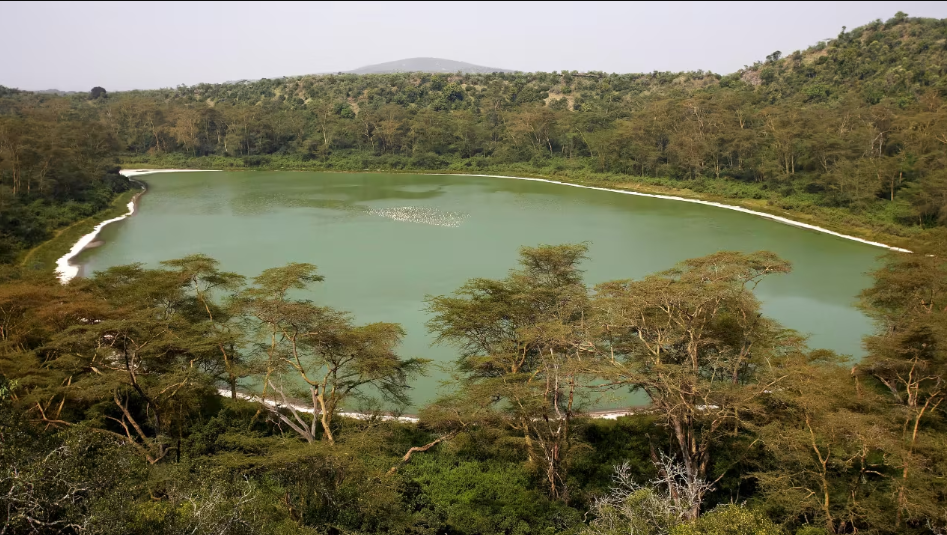
- Crater Lakes: These lakes form within volcanic calderas or maars, typically featuring steep, circular shorelines that reflect their volcanic origins. Some of Kenya’s most distinctive crater lakes include Lake Chala, Lake Simbi Nyaima (also known as Lake Simbi), and Lake Paradise in Marsabit.
- Desert Lakes: As their name suggests, these lakes exist in arid regions and are typically shallow, ephemeral, and often saline or hypersaline. They develop in endorheic basins where evaporation exceeds water inflow, often leaving behind salt pans or seasonal water bodies during dry periods. Kenya’s desert lakes include Lake Turkana, Lake Logipi, and Lake Kamnarok.
- Tectonic Lakes: These lakes form within the Great Rift Valley escarpments due to crustal subsidence and geological activity. Most of Kenya’s major lakes fall into this category, and their water chemistry ranges from freshwater to alkaline, depending on hydrological connectivity and local geology.
Top 20 Major Lakes in Kenya by Size
Below is a table of 20 widely lakes in Kenya, ranked by their sizes (surface area in square kilometres):
| Rank | Lake Name | Type | Area (km²) | Key Notes |
|---|---|---|---|---|
| 1 | Lake Turkana | Saline | 6,405 | World’s largest permanent desert lake and major inland water body in northern Kenya. |
| 2 | Lake Victoria (Kenyan waters) | Freshwater | 3,855 | Part of Africa’s largest lake by area; Kenya’s share is widely reported at 3,855 km² in national tables. |
| 3 | Lake Baringo | Freshwater (slightly alkaline) | 155 | Supports important birdlife and freshwater fisheries; one of the few freshwater Rift Valley lakes. |
| 4 | Lake Naivasha | Freshwater | 149 | Key horticultural hub, supports hippo populations and diverse bird species. |
| 5 | Lake Magadi | Saline | 110 | Known for extensive trona deposits and hot springs around its margins. |
| 6 | Lake Bogoria | Soda | 40 | Famous for geysers, hot springs, and large gatherings of lesser flamingos. |
| 7 | Lake Nakuru | Soda | 32 | Part of a UNESCO-recognized lake system; renowned for flamingos and wildlife in Lake Nakuru National Park. |
| 8 | Lake Jipe | Freshwater (slightly saline) | 25 | Transboundary lake shared with Tanzania, fringed by papyrus and other wetland vegetation. |
| 9 | Lake Logipi | Saline | 24 | Remote saline lake in northern Kenya, sustained by the Suguta River and hot springs. |
| 10 | Lake Elementaita | Soda | 21 | Shallow soda lake within the Kenya Lakes System World Heritage Site, important for lesser flamingos. |
| 11 | Lake Kanyaboli | Freshwater | 9 | Satellite of the Lake Victoria system, noted for its biodiversity and papyrus wetlands. |
| 12 | Lake Chala | Crater (freshwater) | 5 | Transboundary crater lake on the Kenya–Tanzania border, known for its clear, deep waters. |
| 13 | Lake Ol’ Bolossat | Freshwater | 3 | Only natural highland lake in central Kenya, feeding rivers that flow toward the Ewaso Nyiro basin. |
| 14 | Lake Kabongo | Seasonal | 3 | Seasonal lake in Kajiado County that supports pastoral livelihoods during rainy periods. |
| 15 | Lake Loongojit | Saline | 3 | Small saline lake in the Rift Valley with sparse aquatic vegetation. |
| 16 | Lake Solai | Freshwater (reservoir) | 2.5 | Human-made reservoir in Nakuru County that supports local irrigation activities. |
| 17 | Lake Kamnarok | Freshwater | 2 | Kerio Valley lake historically known for its crocodile populations but now affected by siltation. |
| 18 | Lake Simbi Nyaima (Lake Simbi) | Soda (crater) | 1.8 | Small soda crater lake and culturally important site for surrounding communities |
| 19 | Lake Sare | Freshwater | 1.5 | Satellite of Lake Victoria providing refuge for fishes and wetland species. |
| 20 | Lake Kenyatta (Lake Mukunganya) | Freshwater | 3 | Lake in Lamu County, also referred to locally as Lake Mukunganya. |
Questions And Answers
What is the largest lake in Kenya?
How many lakes are there in Kenya?
What is the largest lake in Africa in 2026?
Lake Victoria is the largest lake in Africa by surface area, at about 69,484 square kilometres
What are the 5 lakes in Kenya?
Five commonly referenced major lakes in Kenya are Lake Turkana, Lake Victoria (Kenyan portion), Lake Naivasha, Lake Nakuru, and Lake Baringo.
What are the 5 salty lakes in Kenya?
Five well-known saline or alkaline (soda) lakes in Kenya are Lake Magadi, Lake Bogoria, Lake Nakuru, Lake Elementaita, and Lake Turkana (partly alkaline/saline).